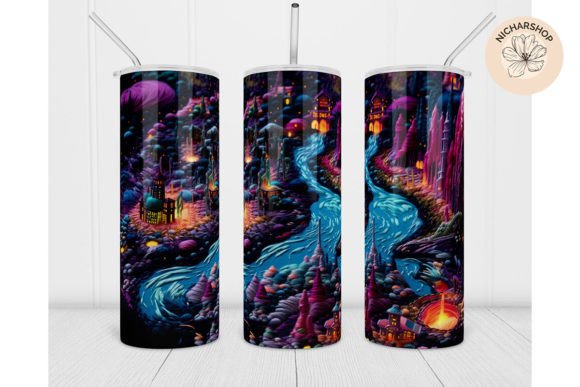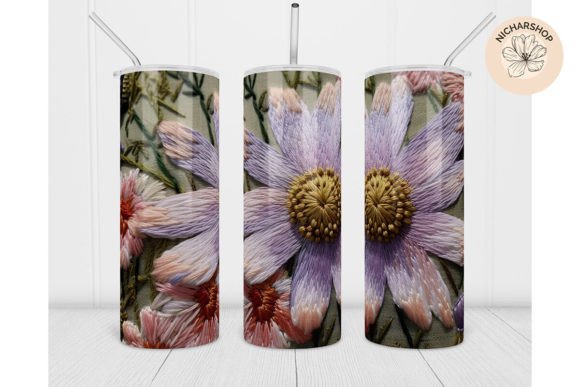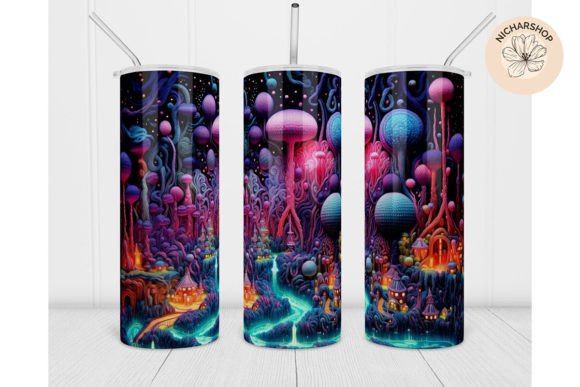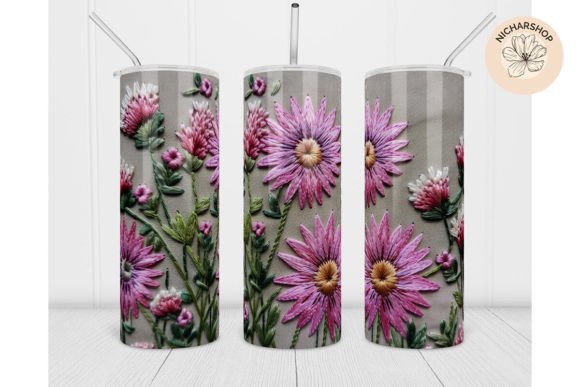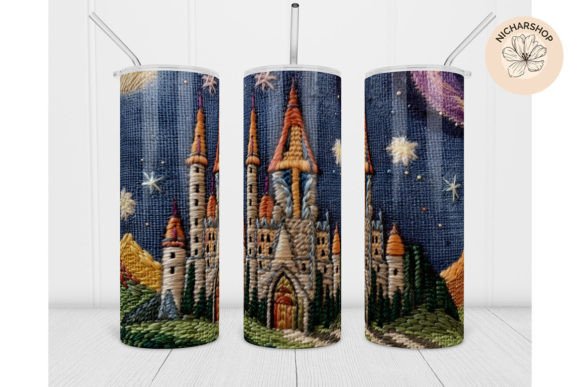
20oz 3D Castle Tumbler Wrap Design Review
As an embroidery designer who frequently consults with small businesses on merchandise development, I approach every new graphic asset with a critical eye toward production viability. When evaluating the 20oz 3D Castle Embroidery Tumbler Wrap, my first assessment focuses on translating a digital sublimation template into tangible branded goods. While this product is explicitly a digital PNG download intended for print templates and graphics, its aesthetic structure offers significant potential for adaptation into machine embroidery design projects. For boutique owners, café operators, and handmade brands, understanding how to leverage this visual style across different mediums is essential for maintaining consistent brand identity.
Visual Personality and First Impressions
The immediate impression of the 20oz 3D Castle Embroidery Tumbler Wrap is one of whimsical elegance mixed with rustic charm. The "3D" descriptor in the title suggests depth, shading, and texture that mimics stitched dimensionality even in a flat graphic format. For a creative studio, bakery, or florist, this design language communicates a sense of established tradition and handcrafted care. It does not feel overly corporate or sterile; rather, it possesses a narrative quality that resonates with customers seeking authentic connections.
From a professional standpoint, the design strikes a balance between playful and premium. The castle motif implies stability and heritage, making it suitable for businesses wanting to project longevity. However, because this is a high-resolution 300 DPI PNG file, the intricate details that make it beautiful for sublimation can present challenges when converting to custom apparel or embroidered patches. As a designer, I see this as a versatile asset that bridges the gap between digital mockups and physical merchandise, provided the translation is handled with technical precision.
Real-World Applications for Small Business Merch
When integrating the 20oz 3D Castle Embroidery Tumbler Wrap aesthetic into a commercial embroidery workflow, versatility is key. Small business merch relies on cohesion across various touchpoints. Here is how this design concept performs in practical scenarios:
- Embroidered Patches: The castle silhouette works exceptionally well as a standalone patch for denim jackets or tote bags. The distinct shape allows for clean merrowed edges, serving as a recognizable logo mark without requiring complex internal text.
- Apron Embroidery: For bakeries and florists, placing this design on the chest or pocket area of an apron creates a uniform look that feels artisanal. The visual weight of the castle balances well against heavy canvas fabrics.
- Cap Embroidery: The verticality often associated with castle architecture fits naturally within the curved front panel of a hat. This makes it ideal for outdoor markets or staff uniforms where headwear is necessary.
- Tote Bag Design: As a center chest or large back print, the design serves as a walking billboard. When adapted for embroidery, it adds perceived value to what might otherwise be a simple cotton bag.
- Printable Mockups: Before committing to stitch-outs, use the original PNG files to create accurate printable mockups for client approval. This ensures the visual expectation matches the eventual finished product.
Technical Considerations and Production Limitations
While the 20oz 3D Castle Embroidery Tumbler Wrap provides excellent source material, users must exercise caution during the digitizing and production phases. A high-DPI sublimation graphic contains gradients and micro-details that do not translate directly to thread. When adapting this for cap embroidery or small patches, specific limitations must be respected to ensure professional results.
Stitch Density and Fabric Texture: The "3D" effect in the digital file likely relies on shadows and highlights. In machine embroidery design, replicating this requires careful manipulation of stitch density and thread colors. Over-densifying to achieve depth can cause puckering on lighter fabrics or distort the shape on structured caps. Always test on the actual fabric texture intended for the final run.
Small Patch Sizes: If reducing the castle motif for a sleeve detail or small label, fine lines may disappear. Thread has physical thickness; details smaller than 1mm often fail to register clearly. Simplify the design assets by removing interior shading and focusing on bold outlines for miniature applications.
Hoop Size and Stabilizer: Confirm your hoop size accommodates the full design without excessive re-hooping. For textured fabrics like towels or fleece often used in handmade product lines, use appropriate stabilizer to prevent the intricate castle details from sinking into the nap. Without proper backing, the design will lose its definition and professional appeal.
Impact on Brand Identity and Customer Trust
Consistency builds trust. When a customer sees the same castle motif on a tumbler wrap, a staff apron, and a shopping bag, it reinforces brand identity. The 20oz 3D Castle Embroidery Tumbler Wrap serves as a foundational graphic element that can unify disparate product lines. For Etsy sellers and craft businesses, this level of visual consistency signals professionalism and attention to detail.
Furthermore, the choice of a castle motif evokes feelings of safety, quality, and timelessness. In a market saturated with minimalist logos, a detailed, illustrative design stands out. It suggests that the business values craftsmanship. Whether applied via sublimation using the original PNG or through commercial embroidery adaptation, the design elevates the perceived value of the merchandise. Customers are more likely to retain and cherish items that feature high-quality, cohesive branding, turning them into loyal advocates for the business.
Professional Designer Notes for Implementation
Before launching production based on the 20oz 3D Castle Embroidery Tumbler Wrap, adhere to these best practices to ensure success:
- Verify File Specifications: Remember that you are receiving a digital file for sublimation or graphic design, not a pre-digitized embroidery file. You will need to hire a professional digitizer or use software to convert the PNG into a stitch format suitable for your machine.
- Test in Black and White: Before selecting thread colors, run a test stitch-out in black and white. This reveals whether the design's contrast relies solely on color or if the structural integrity holds up through value differences alone.
- Check Commercial Licensing: Always confirm the license terms included with the download. Ensure you have the right to use the design for commercial embroidery and resale of finished products, not just personal crafting.
- Create Physical Samples: Never sell based solely on digital renderings. Stitch a sample on the exact garment or item you intend to sell. Inspect spacing, registration, and overall feel. A digital file looks perfect on screen; thread behaves differently in reality.
- Compare Beside Other Assets: Print the PNG and place it next to your existing embroidered samples. Does the scale match? Is the style consistent? Visual harmony across all brand touchpoints is crucial for a polished presentation.
- Evaluate Washability: If using this for staff uniforms or frequent-use tote bags, perform a wash test. Complex designs with high stitch counts can degrade faster. Adjust density or simplify elements if durability is compromised.
By treating the 20oz 3D Castle Embroidery Tumbler Wrap as a strategic design asset rather than just a decorative graphic, small business owners can create merchandise that is both visually stunning and commercially viable. The key lies in respecting the technical boundaries of embroidery while leveraging the strong visual identity the design provides. Whether used for sublimation tumblers or adapted for embroidered patches, this design offers a robust foundation for building a memorable, professional brand presence.